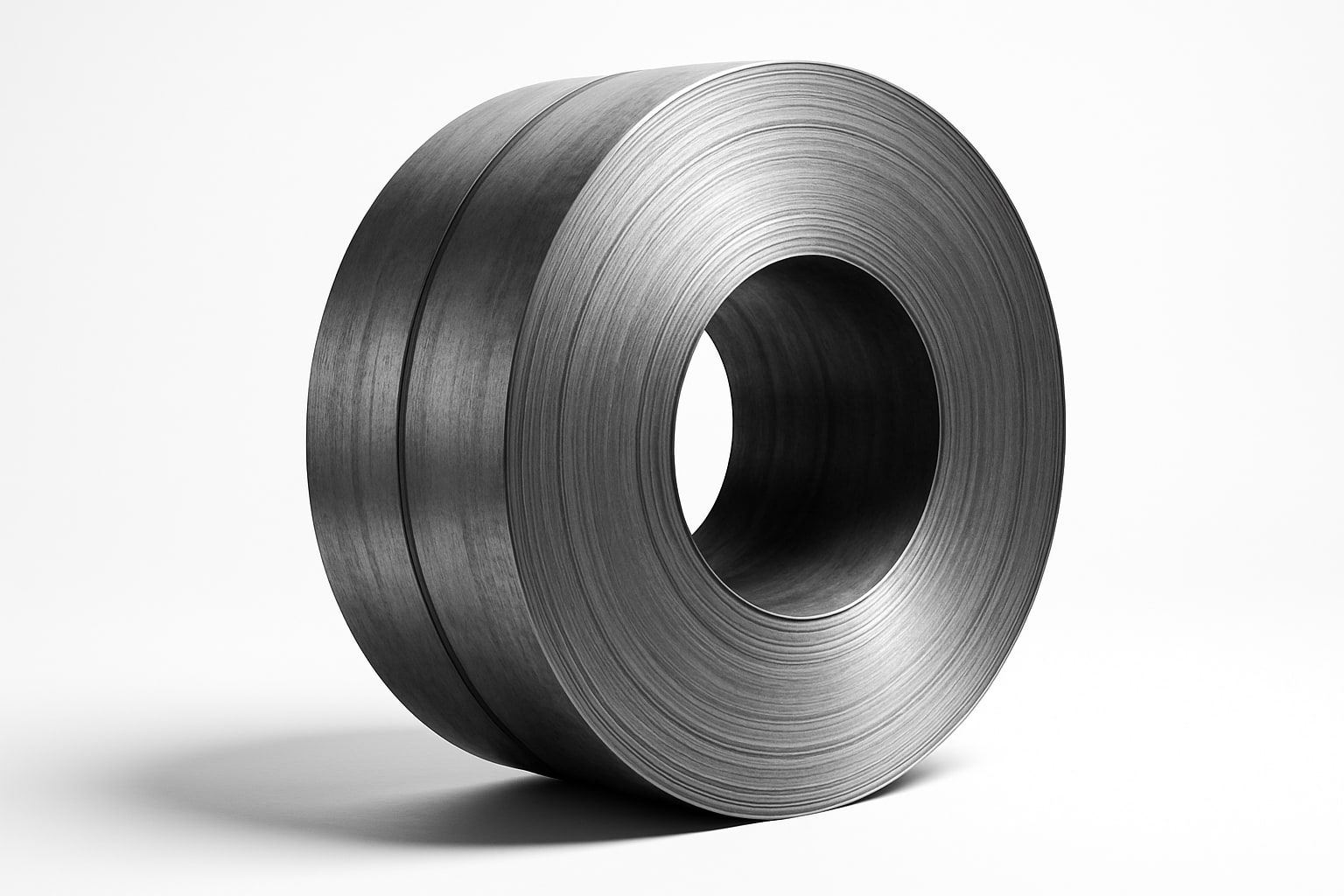
Cold-rolled vs hot-rolled — when the price premium earns itself
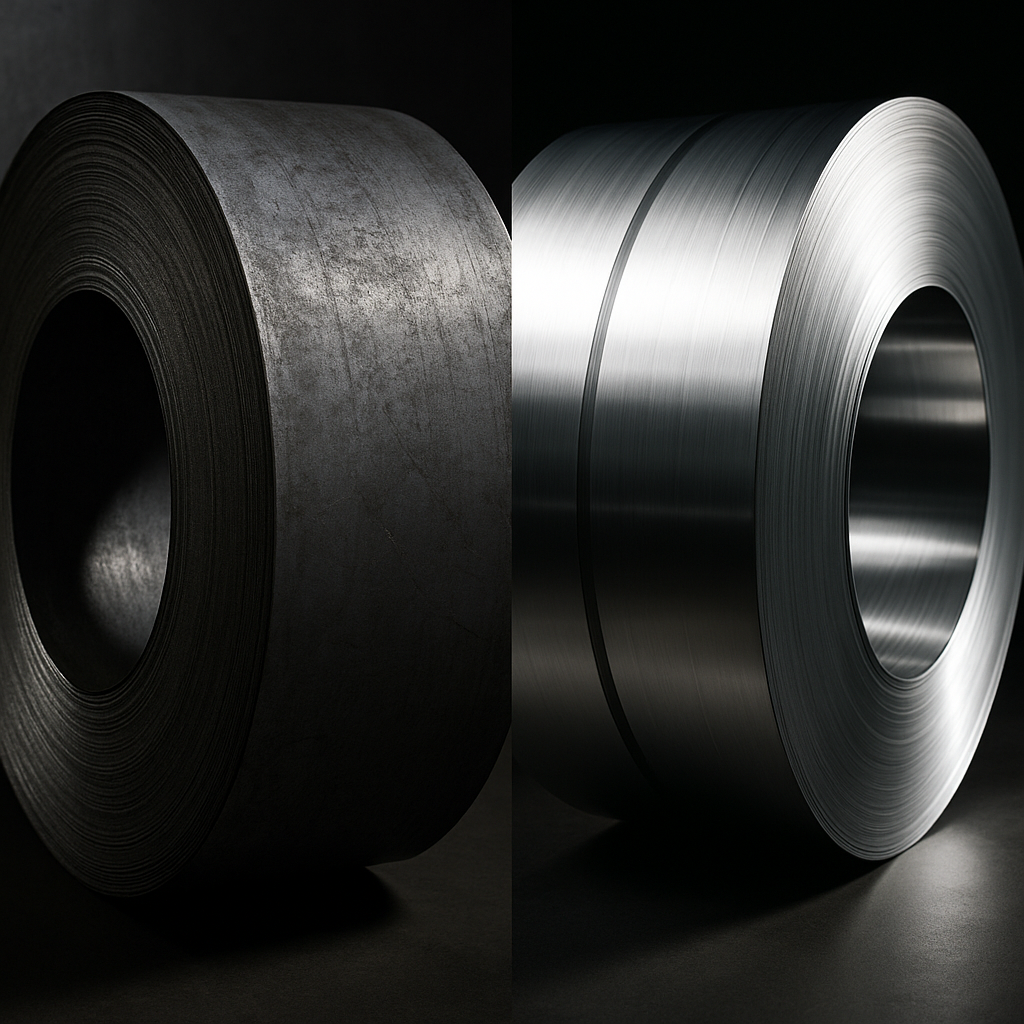
Cold-rolled coil (CRC) trades at roughly $80–130/MT premium over the same-grade hot-rolled coil (HRC). That premium buys you three things: dimensional accuracy, a better surface, and downstream cost avoidance. When does it earn itself?
The rolling difference
HRC is produced above 900°C — thick, dark grey, mill-scale on the surface, thickness tolerance around ±5%. CRC starts as HRC that's then pickled, cold-reduced through a tandem mill at room temperature, and annealed. Result: thickness tolerance ±1%, smooth silvery surface, tighter mechanical properties.
When CRC clearly wins
- Automotive skin panels — need Class-A surface, deep drawability, tight thickness
- Appliance shells — refrigerator sides, washing-machine drums; visible surface matters
- Furniture / office equipment — anywhere paint quality is visible
- Anything downstream-painted — pretreatment cost drops sharply on cold-rolled substrate
When HRC is fine
- Structural (beams, plates, structural sections)
- Rebar (naturally hot-rolled)
- Anything welded or embedded — mill scale removes during welding anyway
- Any non-visible chassis component
The break-even calculation
A rough rule: if your downstream process saves more than $100/MT in surface preparation and rework, CRC pays. In appliance manufacturing that break-even is easy; in structural fabrication it's almost never met.
Buying CRC for structural work is like buying razor blades to shave planks. It works. It's just wasteful.
The middle path — pickled and oiled (P&O)
Between HRC and CRC sits P&O — hot-rolled coil that's been pickled to remove mill scale and lightly oiled. It costs $20–40/MT more than HRC, has HRC's thickness tolerance, but a cleaner surface. For light structural / general fabrication where you want paint adhesion without CRC's dimensional discipline, P&O is often the pragmatic answer.