The PPGI paint stack — primer, topcoat, backer in 30 μm
Calibre Editorial
Commodity Research Desk
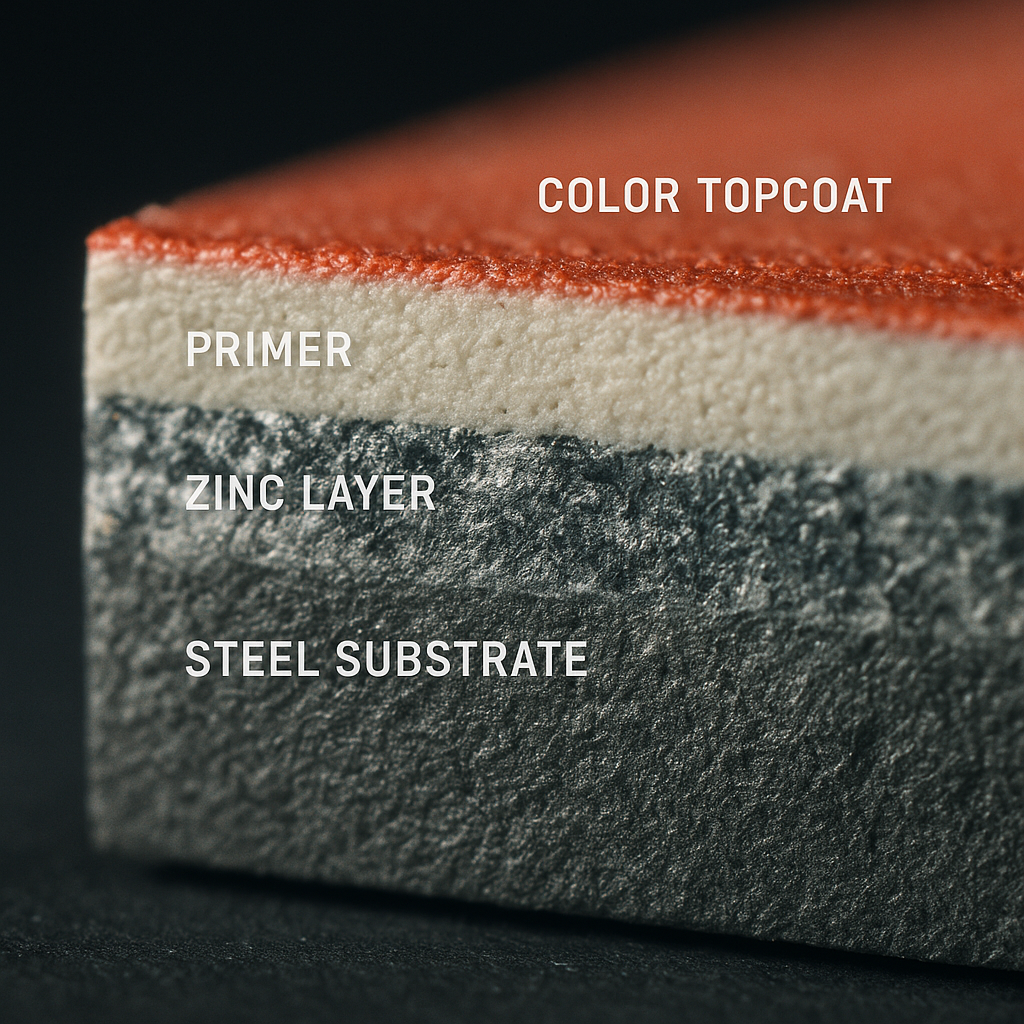
PPGI (pre-painted galvanised iron) looks like a solid-colour metal sheet. It's actually a five-layer sandwich, and understanding those layers is the difference between a roof that lasts 20 years and one that chalks in 5.
Cross-section, top to bottom
- Topcoat — 15–20 μm polyester, SMP, PVDF, or HDP. Colour + weather resistance.
- Primer — 5 μm epoxy or polyurethane. Bonds topcoat to substrate; carries pigment for corrosion inhibition.
- Chromate conversion coat — sub-micron. Creates the chemical bond between paint and zinc.
- Zinc coating — 20 μm (Z275) galvanised layer.
- Steel substrate — 0.30–0.45 mm cold-rolled base.
- Backer coat — 8–10 μm epoxy on the underside. Protects the roof-facing side from condensation.
Total paint stack: about 30 μm on the topside, 8–10 μm on the underside. Which sounds like nothing until you consider that a human hair is 70 μm.
Topcoat systems, ranked by life
- RMP (regular polyester) — 5–8 year life. Cheap. Chalks in UV.
- SMP (silicone-modified polyester) — 10–15 years. Standard choice for warehouses.
- HDP (high-durability polyester) — 15–20 years. Improved gloss retention.
- PVDF (polyvinylidene fluoride) — 25+ years. Architectural cladding. 2× the cost.
What to check on delivery
- Coating thickness (micrometer gauge) matches spec — under-application is common
- Gloss level matches sample (60° gloss meter)
- Adhesion — cross-hatch test with tape peel should show 0 lift
- Colour ΔE against reference standard should be under 1.5 for architectural applications
The topcoat sells the sheet. The primer sells the roof.